All about great fitness and fast muscle building

Posts tagged ‘muscle building’

Why Do My Muscles Not Grow?

There are many reasons why your muscles won’t grow or why your muscle growth is retarded. One main culprit for your muscle tissue to in a catabolic and not in an anabolic state is the stress hormone called cortisol. This stress hormone, cortisol, is produced by your body when you are under stressful situations.
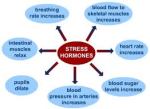
The Stress Hormon Cortisol

The Stress Hormon Cortisol

Yes, any type of stress, whether they are mental stress, physical stress or just emotional stress will trigger off an increase in the production of cortisol hormones. A high level of cortisol is always a bane for bodybuilders and that in itself, is creating more stress.

When you exercise or especially do weightlifting body building exercises, you are placing a tremendous stress on your body. This in turn will cause the cortisol hormone in your body to rise to unacceptable level which may destroy your muscle tissues, bone density and causes weight gain especially abdominal fat. Ohhh…that abdominal fat that would not go away.

This hormone hates your muscles and wants you to grow fat. It takes away protein from the muscles. However to be fair to this hormone, the cortisol hormone has its positive functions.

Cortisol is produced by the adrenal cortex and is commonly known as a stress hormone because the level of cortisol in your body rises sharply when you are under stress. This hormone plays an important role in your body’s metabolic function, it facilitates cardiovascular function, carbohydrate metabolism and controls inflammation. After all, it is a steroid hormone.

As more cortisol is being produced, your muscle tissue breaks down further since the amino acids from your muscle protein is being converted into glucose for energy. This hormone also blocks new muscle tissues from growing because it interferes in protein synthesis in your muscles.

How to lower cortisol level?

  • Get enough sleep – Let your body recuperate from the day’s stress and let the body rebuild its wears and tears. A lack of sleep will put your body under further stress and thus increasing cortisol levels.
  • Avoid stress – Take up yoga, read a book, take a break from whatever you are doing. Learn meditation and breathing techniques to reduce everyday stress. Take a week or so break from your exercise routine after 6-8 weeks of regular training. As your body learns how to relax, the level of cortisol hormone will fall correspondingly.
  • Do not over train – Over training is a common issue amongst athletes of all types. This is especially so in bodybuilding and weight lifting. You are already damaging your muscles when you lift weights, don’t let cortisol hormones rob your muscles of the much needed proteins and preventing muscle repair and growth.

Once your body and mind is free from stress, your cortisol production will be at a healthy level and you will once again see your muscles growing, provided that you are doing other things that are conducive to getting your muscles to grow.

What else can I do to make my muscles grow?

Furthermore you have to combine your training regime with the right diet for optimum results. It is not always easy to plan a good diet. Using the right tools to determine what you need to eat and when, will definitely help you to recover quickly and get maximum results. Use this excellent nutritional software with the great muscle training guide. It is called ‘The Muscle Maximizer‘. Go there and check it out!

How Long Should You Rest Between Muscle Building Sessions?

This article examines how much time muscles need to recover before exposing them to further intensive exercise.

In an earlier article we concluded that muscles must be worked to failure if an adequate hypertrophic response is to occur. Whether this involves one or more sets is irrelevant as in either scenario the muscles must be worked to failure and beyond. This causes significant microscopic damage to the muscle tissues and it is during the period of recovery that protein synthesis undertakes the repair process that results in bigger muscle fibers.

But how long does this process take and when is it safe to expose those same muscles to further intensive exercise? Scientific studies suggest that muscle fiber degradation takes approximately five to seven days to repair and recover. Any further exposure of the affected muscle to intensive activity will interfere with the recovery process and actually prevent it from achieving maximum growth. However, using the muscle to assist in exercising other body parts or even taking part in low intensity aerobic exercise will not prevent recovery.

It follows therefore that each muscle group should be trained intensively only once each week in order to allow full recovery. This can be achieved by incorportating a split training regime that allows you to work out several times each week but still exercise each muscle group intensively only once every seven days.

Furthermore you have to combine your training regime with the right diet for optimum results. It is not always easy to plan a good diet. Using the right tools to determine what you need to eat and when, will definitely help you to recover quickly and get maximum results. Use this excellent nutritional software with the great muscle training guide. It is called ‘The Muscle Maximizer‘. Go there and check it out!

Abdominal Exercises For Beginning Bodybuilders

We all have to start somewhere so this article outlines the lifting exercises that are suitable for beginners with an emphasis on developing the abdominal muscles.

The abdomen contains the muscles that most beginners struggle with because they take a long time to develop and need a low level of body fat to be seen. The abdominal muscle group consists of three main muscles:

  1. Rectus abdominis – commonly known as the abs, this is a large flat muscle wall that runs from the lower chest to the pubic bone.

  2. Obliquus abdominis – commonly known as the obliques, this muscle runs diagonally along the side of the mid-section from the lower ribcage to the pubic area. The internal obliques lie underneath the external obliques.

  3. Transversus abdominis – this is a thin strip of muscle that runs horizontally across the abdomen.

You can target these muscles effectively by performing the following exercises:

  1. Crunches – 3 sets of 15-20 reps. This exercise will work the upper abs.

  2. Pelvic tilts – 3 sets of 15-20 reps.This exercise will target the lower portion of the abdomen below the navel.

  3. Side bends – 3 sets of 15-20 reps. This exercise will work the obliques.

As with all exercises you need to take care in scheduling specific body parts. To begin with you should incorporate your abdominal exercises into a program similar to the one suggested below:

Day 1: Biceps, Back, Abs

Day 2: Hamstrings, Shoulders, Abs

Day 3: Quads, Forearms, Calves

Day 4: Triceps, Chest, Abs

For the first couple of weeks complete one set but then add one set each week to a maximum of three. At the end of three months you will be ready to move on to more intensive intermediate level exercises.

The Right Foods for the Job

Healthy Food

Healthy Food

Choosing what foods to eat while dieting can be tricky. This is one area that is loaded with controversy. Some people swear by the low-fat approach, while others tout the value of low carbohydrate diets. Each type of diet works for some people, and not for others. Lifestyle and activity levels play a role in this choice.

There are certain foods that should be included in any diet. Leafy green vegetables, whole grain cereal or bread choices, lean proteins, fish, and low fat dairy products (unless lactose intolerant) are all good choices and have vital nutrients that the body needs. These foods provide fiber, protein, and vitamins to keep the body functioning properly.

Athletes, especially those involved in sprinting, jumping, lifting type events, need carbohydrates to fuel the muscles during workouts and competition. Software exists that can help you to determine exactly what you need.
The brain needs carbohydrates to function, as well. For these individuals, an extremely low carbohydrate diet can be counterproductive, and at times dangerous. A low fat approach may be better. This does not mean eliminating all fat from the diet, there are some essential fats that the body needs to cushion and protect the organs, lubricate the joints, and build and manage hormones. These can be obtained through fish, nuts and seeds, and olive oil.

A person who is sedentary may need to lower carbohydrate intake because the body will not be using as many carbs for energy. Increasing lean protein sources and some of the healthy fats can offset the carbohydrates.
The body will need some carbohydrates for short-term energy needs and to feed the brain. Extra carbohydrates must be stored and the only storage area for these is fat.

Cardiovascular, especially long duration, exercise uses fat for the main energy source. Long-term energy is produced by the aerobic energy system and this system relies on the break down of fats for energy. This was the original basis for the low fat diet, thinking that decreasing the fat in the diet would require more fat to be liberated from fat stores. In reality, this is backwards. Just as in the starvation response explained above, the body will hoard nutrients, as well. Knowing that fat is a potent energy source and can be used for long-term energy needs, the body will protect its fat stores. If there is fat coming in through the diet it will be more willing to let some be taken from the fat stores for current energy needs.
This doesn’t mean a diet of only fat is a healthy, or wise, choice, but including some healthy fats in the diet, about 20-25% of the daily intake of calories, is a good idea when trying to lose fat. You can monitor your diet with Software that can help you to determine exactly what you need.

5 Reasons You Are Not Losing Fat – Reason 1

There are some rare genetic reasons for failure to lose body fat, but in most cases it is simple human error. Poor, or ill-informed, choices are often the cause. Choices about what, how, and when to eat are often the root cause of diet failures. We’ll take a look at five of these choices and what you should be doing.
Here is the first reason.

Reason 1: Eat More Often

Many dieters make the mistake of skipping meals, thinking they are reducing their calories and speeding up the fat loss process. In fact, this may be doing just the opposite. Instead, you should be eating five to six small meals spread throughout the day, which for many people is an increase in the total number of meals.

Increasing the number of meals may sound crazy, but it works on a few fronts. First, skipping a meal may reduce the calories that would have been consumed in that meal, but inevitably you end up consuming more in your remaining meals. You will be hungrier in the remaining meals and you will justify the extra helping by convincing yourself that it is still less than you would have consumed in the skipped meal.

To illustrate this, let’s look at the traditional three-meal eating plan.
Normally, you would eat breakfast, lunch, and supper. It comes time to lose a little body fat, so you decide to skip lunch. In the morning you plan out your day and decide that since you are not eating lunch you should have an extra bagel with cream cheese to get you through until supper. All in all not a bad choice, but it does add as much as 350 extra calories, depending on the size of the bagel and the type and amount of cream cheese.

You work all day and come home for supper quite hungry because you skipped lunch. At supper that spaghetti was so good you decide that since you skipped lunch you could have an extra helping. This could add as much as 800 to 1000 extra calories. So, what started out as a plan to cut calories turns out to be no savings at all. The extra helpings could add as much as 1350 calories in the end. How many calories was lunch?

The other issue with skipping meals is a metabolic one. Your body has a set energy need to get through the day. All of the processes going on inside the body require energy. Any extra events require additional energy. If you walk to work, climb the stairs, workout, or simply clean the house you require additional energy. Eating meals actually requires more energy, as well. The body requires energy to digest and process the foods you take in.
So, every time you eat your metabolism must increase for a period of time (about an hour.)

Not only does eating more frequent smaller meals increase the metabolism throughout the day, skipping meals may actually lower the metabolism.
The body is hard-wired to protect itself. It does not like to be starved. If it senses a period of starvation it will slow down the energy production in the body to conserve energy for future needs. It quickly shuffles extra energy in the blood stream to fat stores and slows down the processes within the body. If your body is used to getting three meals a day at regular times, missing just one can trigger the starvation response.

Where Can I Find Out More?

Check out our new program: Recently a new program has been put together. It is a groundbreaking and revolutionary new nutrition and fitness program, called The Muscle Maximizer.

Aside

How to Build Muscle Fast

You can grow your muscles much faster than you expect by using some simple tricks and techniques. To achieve the goal you are after, will need a strong determination, serious effort and high discipline. You should understand that getting a well figured body perfectly with toned muscles may need some time. But you will achieve it. If you know your basics and stick to them and follow the routines precisely.

You should successfully adapt to the right type of diet and exercise. You have put yourself into the right mindset to be completely in the fitness situation. Understanding the basics of muscle building and applying them is important. You should not try to overdo the muscle building and it might become a danger to your fitness. You should take a good care on the things that you take on.

The most important part of the muscle building is that you should have control over the calories you consume daily. This can be the best step to build muscle fast.

The Somanabolic Muscle Maximizer is the revolutionary great muscle building program that provides premium tips & techniques to get toned and ripped muscles. It is the excellent nutritional software with the great muscle training guide. Click here to find out more information about The Muscle Maximizer and be astonished how well you can put yourself fully in control.